Kids Don’t Hate Bedtime. They Hate Transitions.
Every night, parents attempt one of the hardest transitions of the entire day:
taking overstimulated, emotionally exhausted children and somehow guiding them toward calm, separation, and sleep.
While also being overstimulated and emotionally exhausted themselves.
And honestly?
I think a lot of bedtime frustration comes from misunderstanding the actual problem.
Because bedtime is usually not:
a sleep problem.
It’s a transition problem.
Why Bedtime Feels So Emotionally Loaded
Bedtime carries an unusual amount of pressure for parents because we’re trying to solve multiple problems at once.
We want:
kids getting enough sleep,
tomorrow morning to go better,
less emotional chaos,
fewer wakeups,
some adult downtime,
and ideally a peaceful ending to the day.
And unlike many parenting struggles:
bedtime happens every single night.
Which creates this exhausting psychological loop of:
“Why is this still hard if we literally do it every day?”
Parents are often:
touched out,
overstimulated,
decision-fatigued,
and desperate for quiet.
Meanwhile children are often:
overtired,
dysregulated,
connection-seeking,
stimulation-seeking,
and resistant to stopping.
Those two nervous systems collide every night.
Kids Are Not Resisting Sleep. They’re Resisting Transition.
This framing changed bedtime for me completely.
Because when you look closely, bedtime requires children to shift from:
activity → stillness
connection → separation
light → darkness
stimulation → quiet
autonomy → structure
play → stopping
That’s a massive neurological transition.
And honestly?
A lot of adults struggle with transitions too.
We just call it:
doomscrolling instead of going to bed.
Why Bedtime Resistance Happens
Overtired kids often don’t look sleepy
One of the most counterintuitive things about children:
being overtired often makes them look more hyper.
More emotional.
More irrational.
More oppositional.
More energetic.
Not calmer.
Which is why so many parents think:
“They’re clearly not tired.”
Meanwhile the nervous system is actually overloaded.
Bedtime Often Represents Loss of Control
Children spend most of the day being directed:
sit here,
clean up,
put shoes on,
brush teeth,
hurry up,
stop that,
come downstairs,
get in the car.
Then bedtime arrives:
another transition they didn’t choose.
A lot of bedtime resistance is really:
control-seeking behavior.
Which is why tiny amounts of autonomy help disproportionately.
Not unlimited negotiation.
Structured choices.
Things like:
which pajamas,
which book,
which stuffed animal,
which song,
which flashlight color.
Small autonomy reduces power struggles because the child still feels psychologically involved in the process.
Sometimes Kids Are Actually Seeking Connection
This part matters too.
Bedtime means separation.
And children know that.
For many kids, bedtime resistance is partially an attempt to extend closeness:
one more book,
one more question,
one more story,
one more glass of water,
one more hug.
Sometimes they are not trying to avoid sleep as much as they are trying to avoid disconnection.
That framing softens bedtime emotionally in a really important way.
The Systems Approach to Bedtime
Most parents are trying to manage bedtime manually every night through:
repeated reminders,
negotiation,
corrections,
and escalating frustration.
But bedtime works much better when the system itself supports the transition.
The way I think about bedtime now is:
reduce friction,
reduce ambiguity,
increase predictability,
and help the nervous system gradually downshift.
1. RHYTHM
Predictability reduces cognitive load.
When bedtime happens differently every night, children stay mentally alert trying to figure out:
What’s happening?
How long do I have?
What comes next?
Can I negotiate this?
Predictable sequences reduce that uncertainty.
For us, bedtime works best when the order stays mostly stable:
bath,
pajamas,
books,
lights low,
snuggles,
bed.
Not because structure is magical.
Because predictability externalizes the decision-making.
The fewer surprises,
the fewer power struggles.
2. ENVIRONMENT
The environment should communicate:
the day is ending.
A lot of homes accidentally stay stimulating until the exact moment children are expected to sleep.
Bright lights.
Loud TVs.
Chaotic cleanup.
Fast pacing.
High energy.
Then suddenly:
“Okay calm down and sleep.”
That transition is abrupt.
Now I think much more about environmental downshifting:
lamps instead of overhead lights,
sound machines,
cooler temperatures,
quiet music,
blackout curtains,
less visual clutter,
less stimulating toys before bed.
The environment should support regulation,
not compete against it.
3. TRANSITION MANAGEMENT
This is probably the biggest shift.
Most bedtime struggles are transition struggles.
So instead of treating bedtime like:
slamming on brakes,
I think about it like:
landing a plane.
Gradual descent.
The hour before bed matters more than the exact bedtime itself.
Things that help:
slowing the pace of the house,
lower voices,
less stimulation,
reading,
stretching,
warm baths,
quiet sensory activities,
predictable rituals.
The nervous system needs cues that the day is winding down.
4. AUTONOMY
Tiny choices matter enormously at bedtime.
Not open-ended negotiations.
Structured autonomy.
I want children to feel:
guided,
not controlled.
Things like:
“Do you want the blue pajamas or green pajamas?”
“Two books or three short books?”
“Do you want the lantern or the reading light?”
These micro-decisions reduce emotional resistance because children still experience some ownership inside the structure.
5. EXTERNALIZED EXPECTATIONS
Parents often become human notification systems at bedtime.
Brush your teeth.
Put on pajamas.
Get your water.
Go potty.
Stop stalling.
Hurry up.
That creates constant friction between parent and child.
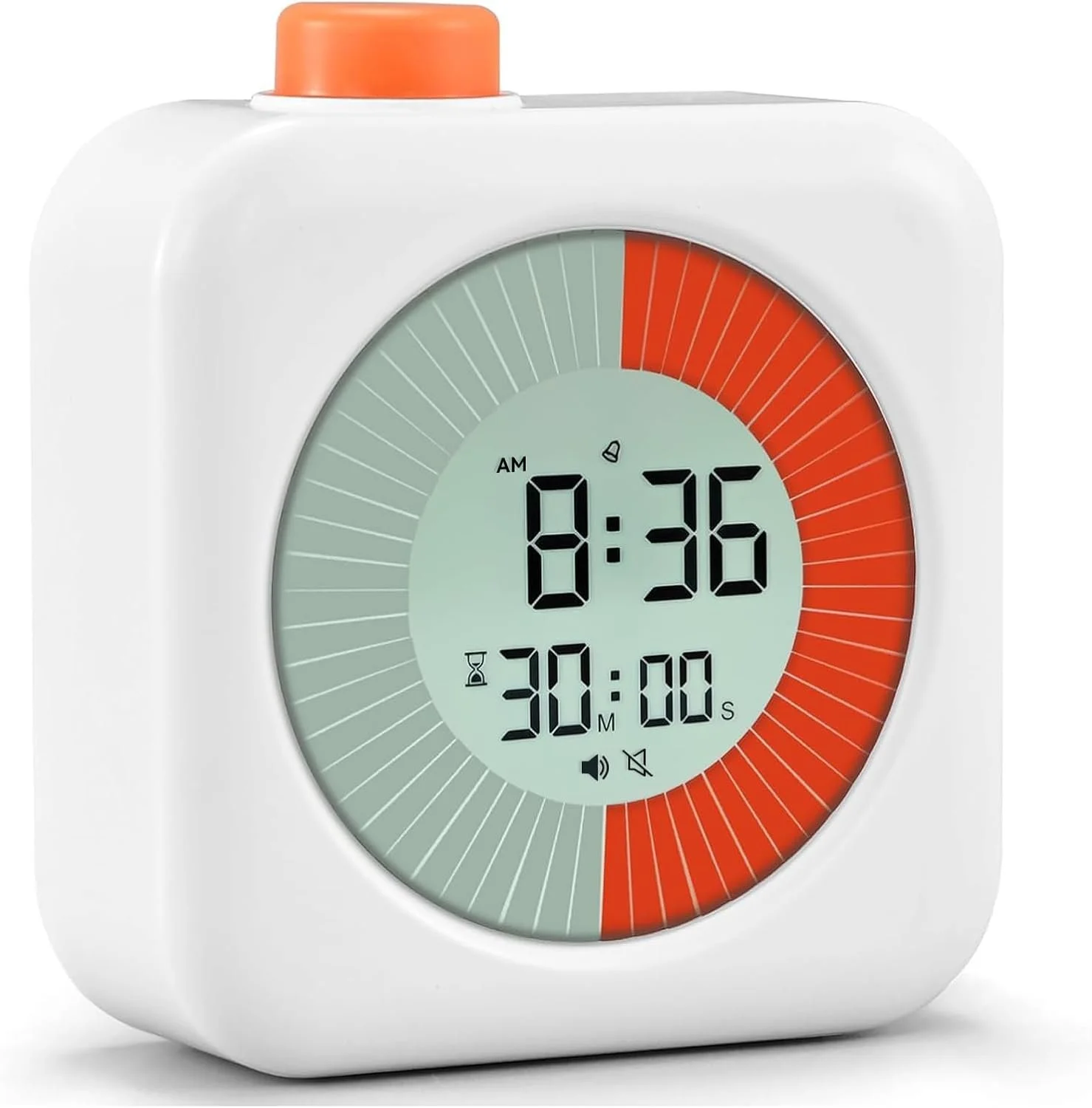
External systems reduce that tension.
Things like:
visual bedtime charts,
timers,
Hatch lights,
checklists,
or simple sequence cards
move the “reminder role” out of the parent-child relationship.
That matters more than people realize.
Especially when parents are already exhausted.
The Goal Is Calm, Not Compliance
This mindset shift helped me a lot.
Because many bedtime approaches accidentally escalate emotional intensity:
threats,
countdowns,
frustration,
lectures,
constant correction.
But nervous systems don’t downshift well under tension.
The goal is not:
perfect obedience.
The goal is:
a child who gradually learns how to transition into rest predictably and safely.
That’s different.
What Actually Helped Us Most
Not perfection.
Not some magical bedtime hack.
Just:
better transitions,
better cues,
less ambiguity,
more rhythm,
more environmental support,
and fewer emotionally charged interactions.
Things that genuinely helped us:
sound machines,
warm bedside lamps,
visual timers,
bedtime checklists,
books always accessible,
predictable sequencing,
and calming sensory routines.
Not because products solve parenting.
Because infrastructure supports behavior.
The Bigger Parenting Principle
A lot of parenting friction comes from trying to manage behavior manually in the moment.
But systems-thinking parenting asks a different question:
How do we design environments and rhythms that make the desired behavior easier to achieve naturally?
Bedtime is one of the clearest examples of this.
Less forcing.
More thoughtful transitions.
Less emotional escalation.
More predictable cues.
Because bedtime is usually not really about sleep.
It’s about helping overwhelmed nervous systems safely shift from one state to another.
Shop Ideas From This Retro





Note: I may receive a small commission from the affiliate links above.